Kitchen Lab / Food chemistry
What happens
in your pan?
The sizzle. The colour. That first extraordinary aroma. Get to know the science behind Indian cooking — and what to do with it.
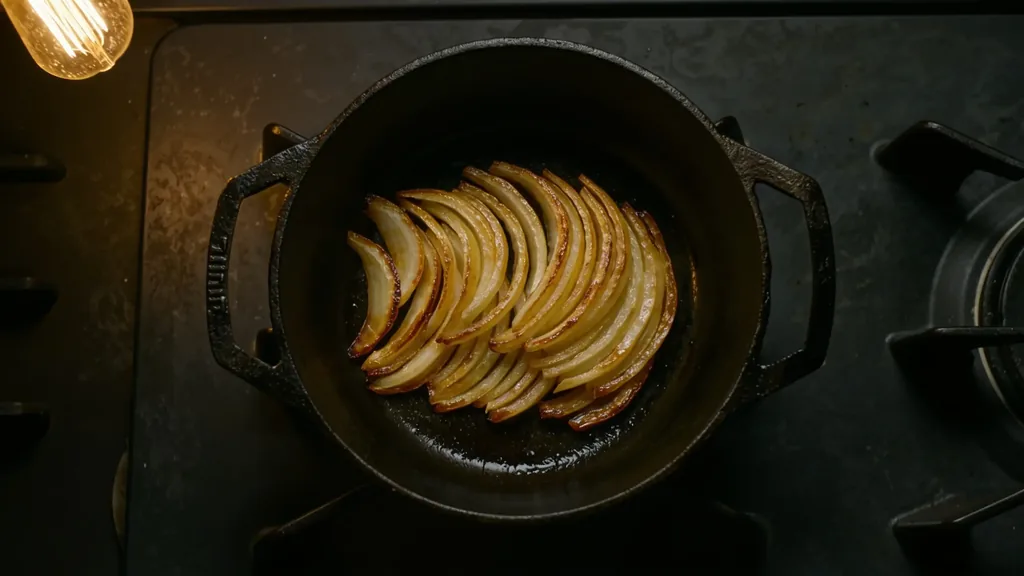
Same onion. A whole new flavour
Golden colour. The familiar depth of a good bhuna.
The heat line
Turn up the heat
Every reaction in the kitchen has a heat where it happens. Drag the flame to see which rasa recipe steps are cooking there.
The reaction library
A little curiosity.
A better cook
Follow an ingredient into the pan. Find out what changes, why it matters, and how to recognise it in your own cooking.
13 reactions · 5 chapters
01 / Heat & browning
Where flavour begins
From golden onions to a sealed pot of biryani: learn what heat is really doing.
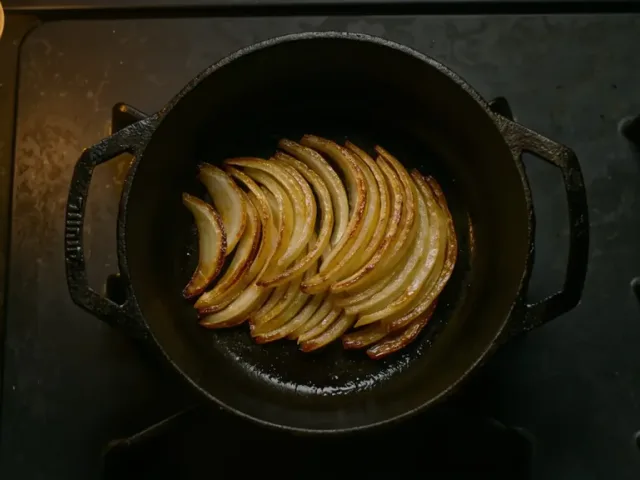
The Maillard reaction
Why golden onions taste so different from raw ones.
Explore the experiment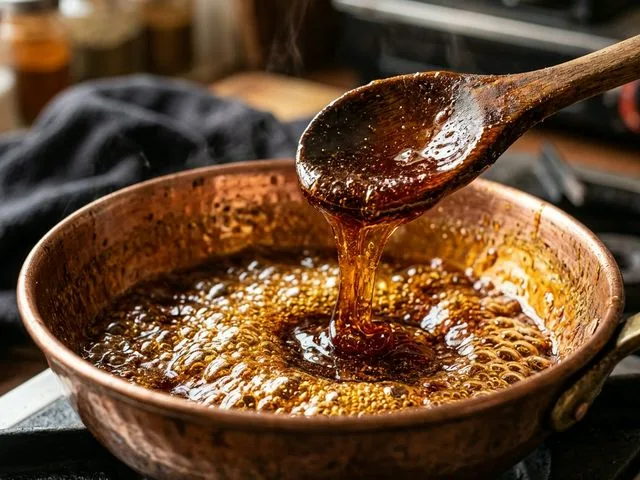
Caramelization
Browning sugar has a chemistry of its own.
Read the science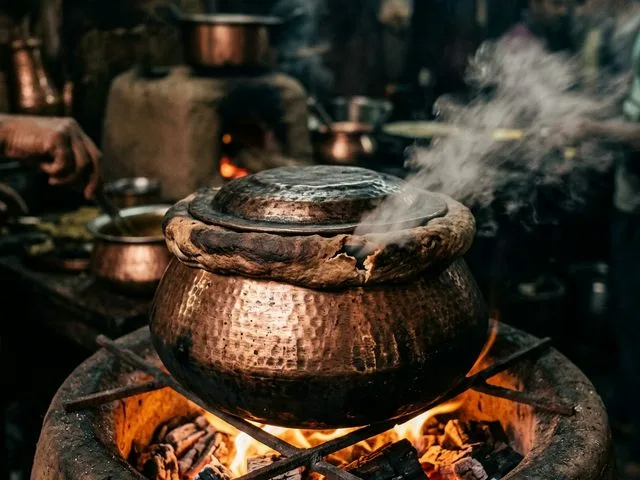
Dum cooking
Keep the steam. Keep the aroma.
Read the science02 / Fats & oil
The carriers of flavour
The first spoon of ghee does more than stop the food from sticking.
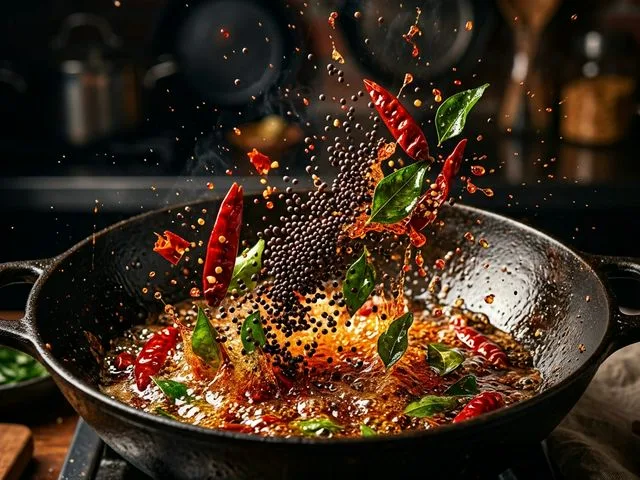
Tadka
What happens when whole spices meet hot ghee?
Read the science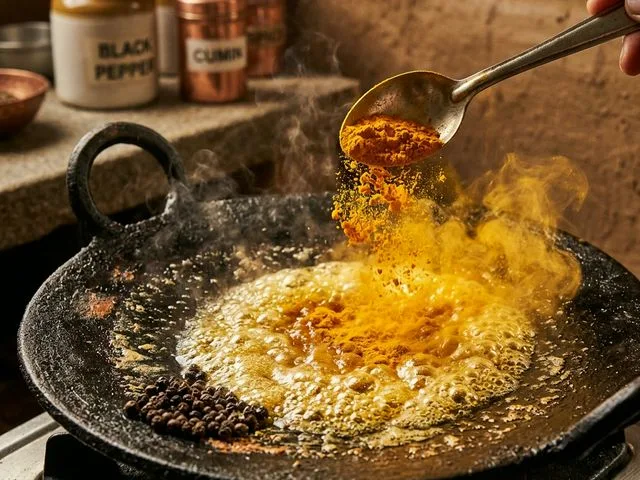
Curcumin & fat
Why turmeric and fat belong together.
Read the science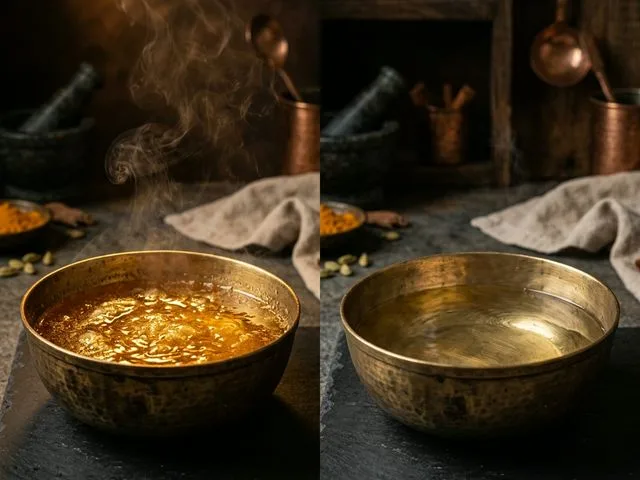
Ghee & smoke points
What changes when butter becomes ghee?
Read the science03 / Spice chemistry
Small ingredients. Big chemistry
Look closer at the heat, colour and aroma in your spice cabinet.
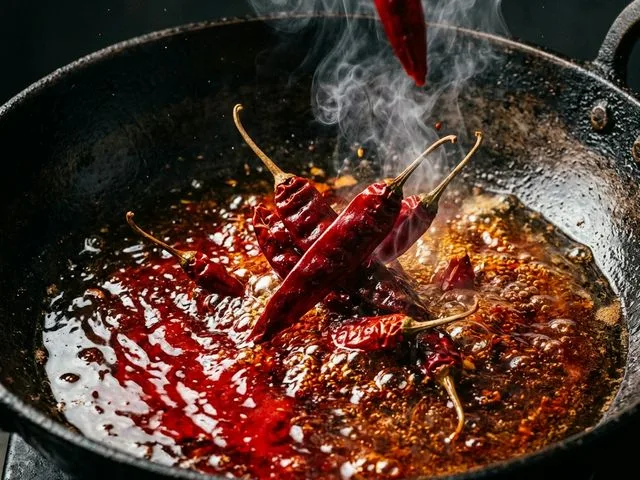
Capsaicin
The heat you feel isn’t the temperature of the food.
Read the science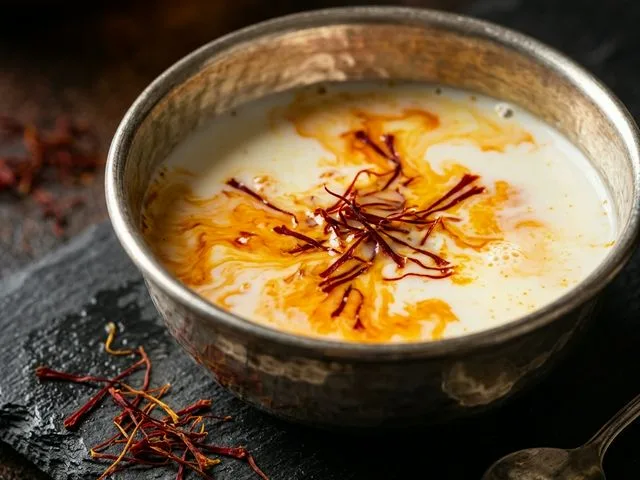
Saffron
Coaxing colour and aroma from a few threads.
Read the science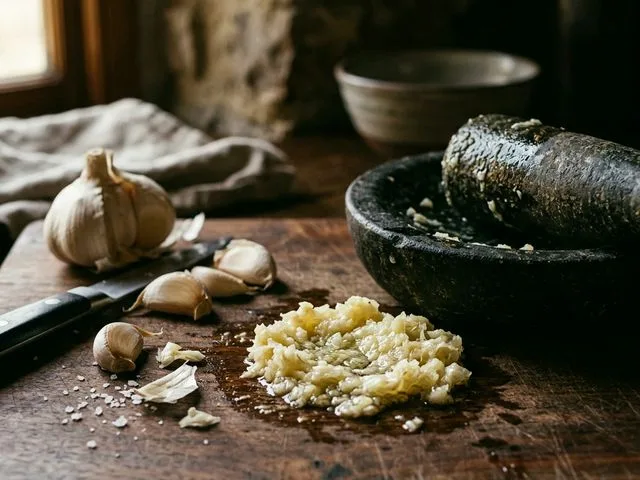
The garlic rest
Why it helps to pause after crushing garlic.
Read the science04 / Proteins & structure
The secret is in the texture
A yogurt marinade. A patient braise. Two very different ways to change a meal.
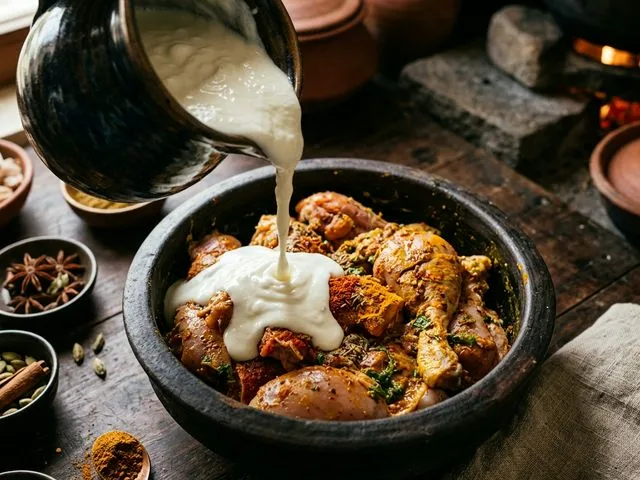
Yogurt marinades
What a marinade can — and cannot — change.
Read the science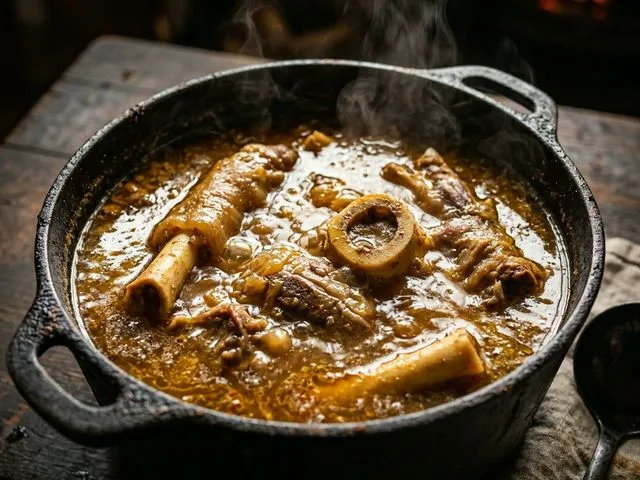
Collagen into gelatin
How a slow braise transforms a tough cut.
Read the science05 / Acids & fermentation
Give it time. Give it tang
Meet the chemistry behind a risen batter and a beautifully sour curry.
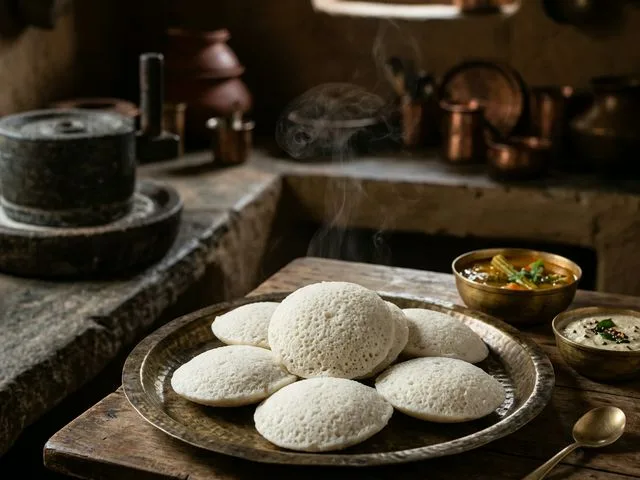
Idli fermentation
The living chemistry inside a rising batter.
Read the science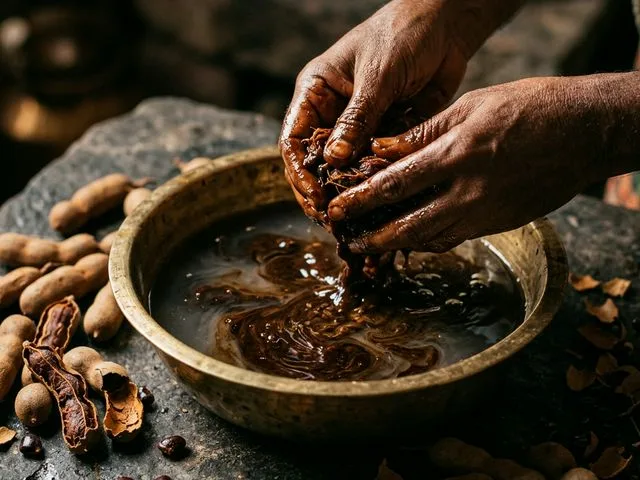
Tamarind
The acid behind that unmistakable tang.
Read the scienceFrom the lab to your kitchen
Now taste
the difference
Every rasa recipe puts the science beside the step. Choose a dish, follow the reaction, and make the lesson your own.
Find your next recipe